Your vehicle's engine relies on precise timing to operate efficiently. Every time the engine runs, the crankshaft and camshaft must rotate in perfect synchronization to ensure the intake and exhaust valves open and close at exactly the right moment. This critical coordination is handled by either a timing belt or a timing chain.
Although both components perform the same essential function, they differ significantly in construction, durability, maintenance requirements, and replacement costs. Knowing which system your vehicle uses and understanding its maintenance needs can help you avoid expensive engine damage and unexpected breakdowns.
This guide explains the key differences between timing belts and timing chains, their expected lifespan, common signs of wear, replacement costs, and tips for extending their service life.
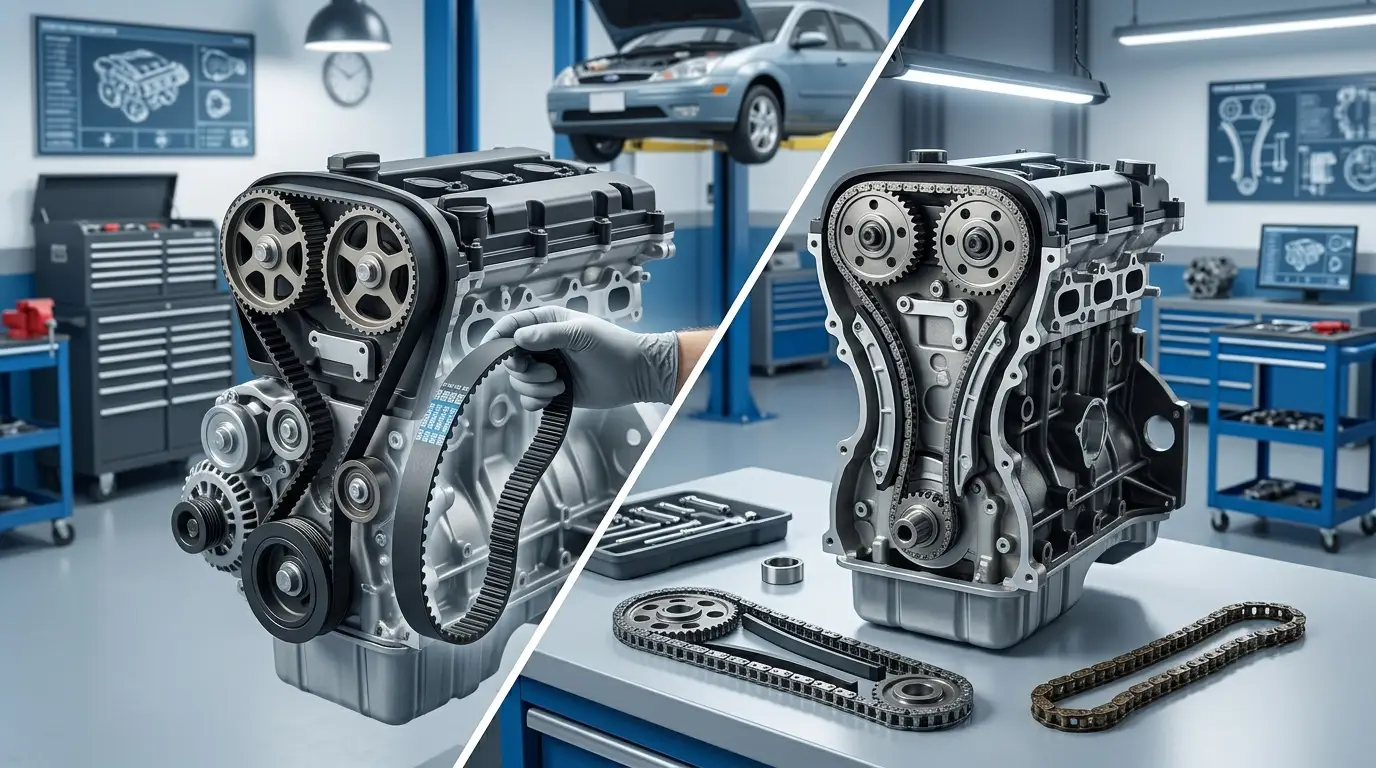
A timing belt is a reinforced rubber belt that synchronizes engine components.
The timing belt connects the crankshaft and camshaft, ensuring they rotate together in perfect timing. Modern timing belts are made from durable rubber reinforced with fiberglass or Kevlar fibers for added strength.
Unlike accessory belts, the timing belt is enclosed within the engine and is protected from dirt and debris.
Many engines also use the timing belt to drive the water pump.
A timing chain performs the same job but is made of metal.
Instead of reinforced rubber, a timing chain is constructed from hardened steel links similar to a bicycle chain but much stronger.
The timing chain operates inside the engine and is lubricated continuously by engine oil.
Because it is metal, a timing chain is generally stronger than a timing belt.
Timing Belt
Timing Chain
The biggest difference is that timing belts are wear items, while timing chains are designed for much longer service life.
Timing Belt Lifespan
Most manufacturers recommend replacement every:
The exact interval depends on:
Ignoring replacement intervals increases the risk of belt failure.
Timing Chain Lifespan
Timing chains typically last:
However, poor maintenance can shorten their lifespan considerably.
Timing Belt
Timing belts require scheduled replacement regardless of appearance.
Rubber naturally deteriorates due to:
Preventive replacement is essential.
Timing Chain
Timing chains usually require no scheduled replacement.
Instead, proper maintenance focuses on:
Clean engine oil helps reduce chain wear.
Timing Belt Replacement
Typical replacement costs:
Costs vary depending on:
Many owners replace the water pump at the same time since it is often driven by the timing belt.
Timing Chain Replacement
Typical replacement costs:
Timing chain replacement is more labor-intensive because it is located inside the engine and often requires significant disassembly.
Timing Belt
Advantages:
Disadvantages:
Timing Chain
Advantages:
Disadvantages:
Timing belts operate very quietly because rubber absorbs vibration.
Timing chains naturally produce more mechanical noise.
A healthy timing chain may create slight engine noise, while excessive rattling often indicates wear.
Watch for:
Never ignore these warning signs.
Symptoms include:
These issues often develop gradually.
Timing Belt Failure
If a timing belt breaks:
In interference engines, this can cause:
Repair costs can reach several thousand dollars.
Timing Chain Failure
Timing chains rarely snap without warning.
Instead, they gradually stretch or wear.
Common issues include:
Although less common, complete timing chain failure can also destroy an interference engine.
Many manufacturers have used timing belts in:
Always consult your owner's manual for your specific vehicle.
Many modern vehicles now use timing chains, including:
Timing chains have become more common due to their durability.
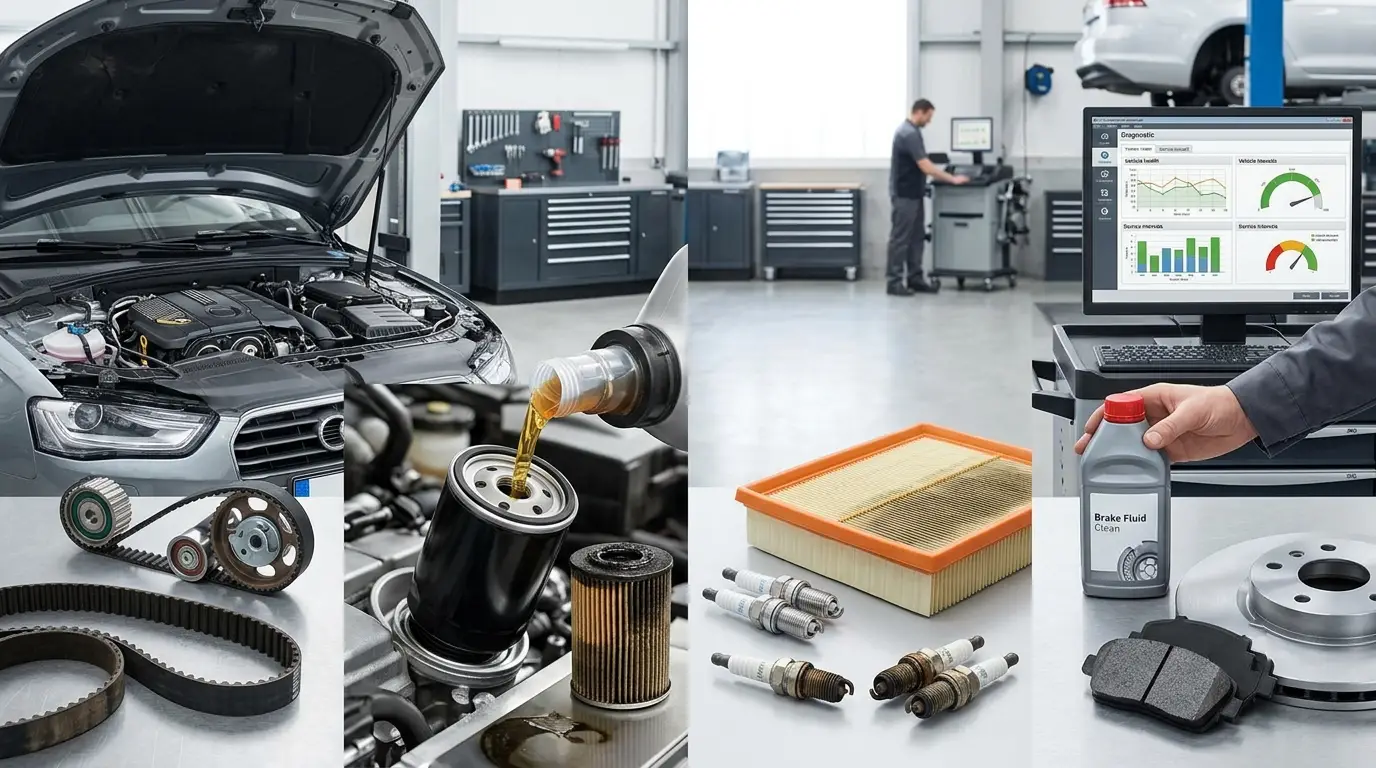
When replacing a timing belt, many technicians also replace:
Replacing these components together reduces future labor costs.
For timing chains, replacement often includes:
Follow these maintenance practices:
Routine maintenance significantly extends engine life.
| Feature | Timing Belt | Timing Chain |
| Material | Reinforced rubber | Hardened steel |
| Lifespan | 60,000–100,000 miles | 150,000–250,000+ miles |
| Maintenance | Scheduled replacement | Oil maintenance |
| Noise | Very quiet | Slightly noisier |
| Replacement Cost | Lower | Higher |
| Durability | Moderate | Excellent |
| Lubrication | No | Yes (engine oil) |
| Failure Risk | Can fail suddenly | Usually wears graduall |
Both timing belts and timing chains play a vital role in keeping your engine running smoothly by synchronizing the crankshaft and camshaft. While timing belts offer quieter operation and lower replacement costs, they require scheduled maintenance to prevent failure. Timing chains, on the other hand, are built for longevity and often last the life of the engine when properly maintained, though they are more expensive to replace if problems arise.
Understanding which system your vehicle uses, following the manufacturer's maintenance schedule, and addressing warning signs early can help you avoid costly engine repairs and ensure dependable performance for years to come.
Neither is universally better. Timing belts are quieter and less expensive to replace, while timing chains generally last longer and require less frequent maintenance.
Check your owners manual, consult your dealership, or use your vehicles VIN to verify the engine specifications.
Yes. Since the water pump is often driven by the timing belt, replacing both together can save labor costs and prevent future repairs.
Timing chains usually show warning signs such as rattling noises, poor engine performance, or diagnostic trouble codes before failing completely.
A worn timing belt can break unexpectedly, potentially causing severe engine damage - especially in interference engines - resulting in repairs that may cost several thousand dollars.