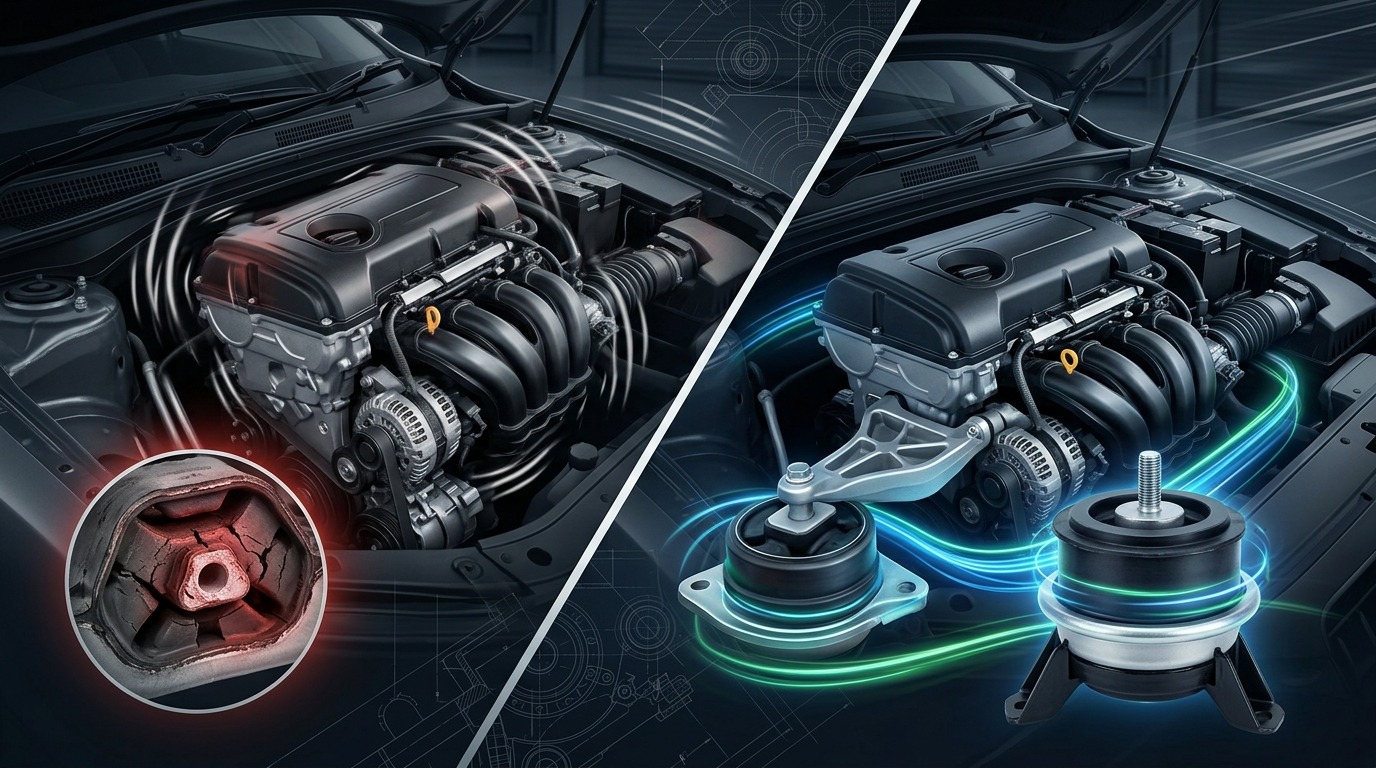
Engine mounts are often overlooked because they are hidden beneath the hood and rarely discussed during routine maintenance. However, these components play a crucial role in keeping your vehicle running smoothly and comfortably. Engine mounts are designed to secure the engine to the vehicle's frame while absorbing vibrations and movement generated during operation.
When engine mounts begin to wear out, crack, or fail, the effects can be felt throughout the entire vehicle. What starts as a slight vibration can eventually lead to poor handling, uncomfortable rides, increased component wear, and even damage to surrounding parts.
Understanding how worn engine mounts affect performance and ride comfort can help you identify problems early and avoid costly repairs. Below is a detailed guide explaining the most common symptoms and impacts of failing engine mounts.
One of the earliest and most noticeable symptoms.
A healthy engine mount isolates most engine vibrations from the passenger compartment. When the mount deteriorates, those vibrations travel directly into the cabin, making the ride less comfortable.
The car engine is no longer securely supported.
Engine mounts keep the engine positioned correctly. When they wear out, the engine may rock excessively during operation, creating instability and increasing wear on surrounding parts.
Comfort decreases significantly.
Even if the suspension is in good condition, worn engine mounts can make the vehicle feel rough and uncomfortable during daily driving.
Loose engine movement creates noise.
As engine mounts deteriorate, the engine may move enough to create impact noises against surrounding components or mounting brackets.
The transmission relies on stable engine positioning.
Because the engine and transmission work together as a unit, instability in one component affects the other.
Transmission alignment can be affected.
Engine movement changes drivetrain geometry, which can contribute to rough shifting and reduced driving comfort.
Movement damages nearby components.
Many engine components are designed around limited movement. Excessive motion caused by bad mounts can shorten their lifespan.
Noise isolation decreases.
A properly functioning engine mount acts as a barrier between engine noise and the cabin. When it fails, noise levels often rise significantly.
Vehicle behavior feels less predictable.
A stable powertrain contributes to predictable handling and smooth operation. Worn mounts can make the vehicle feel less responsive and refined.
Engine vibrations transfer directly to controls.
Steering wheel vibration is often one of the first symptoms drivers notice when engine mounts begin to fail.
The symptom is most noticeable when stopped.
While some vibration is normal, excessive shaking at idle often points to deteriorating engine mounts.
Engine positioning becomes compromised.
Proper alignment helps ensure smooth operation of multiple vehicle systems.
Exhaust systems are affected by movement.
The exhaust system is connected to the engine, making it vulnerable when engine movement exceeds normal limits.
Drivetrain angles are affected.
Engine mounts help maintain proper drivetrain alignment, reducing unnecessary stress on moving components.
An obvious sign of mount failure.
Excessive rocking often indicates that one or more mounts have lost their structural integrity.
Severe mount failure creates risk.
Although complete mount failure is uncommon, severe deterioration should be addressed promptly.
Ignoring mounts often leads to additional damage.
Replacing worn mounts early is usually far less expensive than repairing the damage they can cause to other systems.
Over time, the rubber and hydraulic components inside engine mounts naturally wear out and lose effectiveness.
Early diagnosis can prevent additional drivetrain and suspension problems.
Replacing worn mounts often restores the refined driving experience many drivers thought they had lost permanently.
Engine mounts may not receive as much attention as brakes, tires, or suspension components, but they play a vital role in vehicle performance and comfort. Their primary job is to support the engine while isolating vibrations and controlling movement. When they begin to fail, the effects can be felt throughout the entire vehicle.
From increased cabin vibration and rough shifting to drivetrain stress and higher repair costs, worn engine mounts can create a surprising number of problems. The good news is that early replacement can restore comfort, improve vehicle performance, and prevent additional damage.
If you notice unusual vibrations, clunking sounds, or excessive engine movement, having the engine mounts inspected can help you address the issue before it becomes more expensive.
Most engine mounts last between 60,000 and 100,000 miles, though lifespan varies depending on driving conditions and vehicle type.
Yes. Worn mounts can alter drivetrain alignment and contribute to rough shifting or increased transmission stress.
Yes. Many drivers first notice failed mounts when the vehicle is idling at a stoplight or parked with the engine running.
While possible for a short time, continued driving can lead to additional damage to the transmission, exhaust system, and other components.
Age, mileage, aggressive driving, fluid contamination, and constant engine movement are the most common causes of engine mount failure.