Your vehicle's cooling system plays a critical role in keeping the engine at a safe operating temperature. Without an efficient cooling system, the engine can overheat within minutes, leading to expensive repairs such as a blown head gasket, warped cylinder head, or even complete engine failure.
Two important components in this system are the radiator and the coolant reservoir (also called the overflow tank or expansion tank). While they work together to regulate engine temperature, they serve very different purposes. Many vehicle owners mistakenly believe they perform the same function, but understanding the difference can help you diagnose cooling system issues, perform proper maintenance, and avoid costly engine damage.
In this guide, we'll explain how the radiator and coolant reservoir work, their differences, common problems, maintenance tips, and why both are essential for reliable engine performance.
The radiator is the primary cooling component of your vehicle.
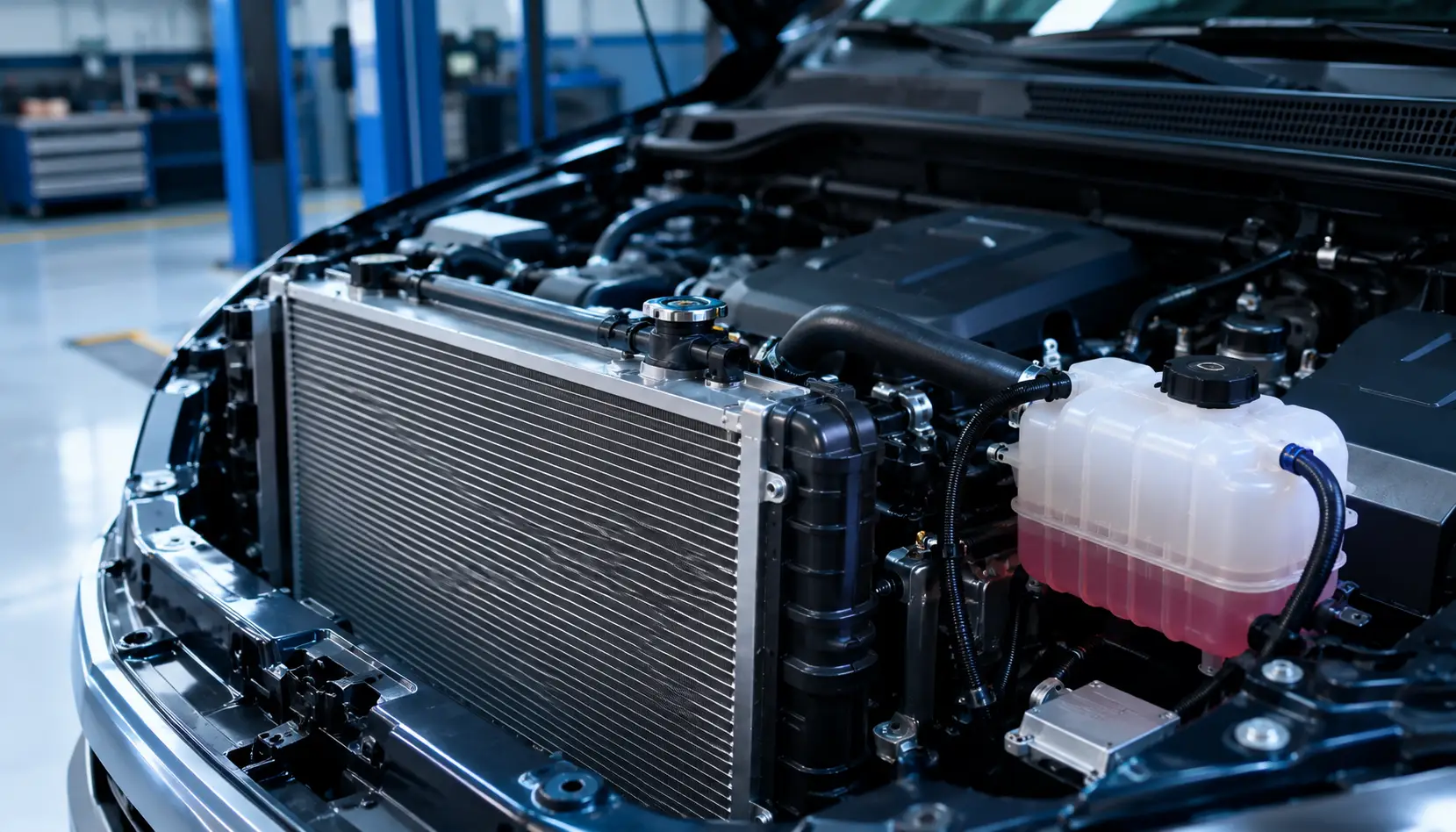
The radiator is a heat exchanger located at the front of the engine compartment, usually behind the front grille. It removes excess heat from the engine coolant before the coolant circulates back through the engine.
Without a functioning radiator, engine temperatures would rise rapidly, causing severe damage.
The cooling process follows these steps:
This cycle repeats continuously whenever the engine is running.
A typical radiator consists of:
Each component contributes to efficient heat transfer and coolant circulation.
The coolant reservoir stores excess coolant.
The coolant reservoir is a plastic tank connected to the radiator by a small hose. It stores coolant that expands as it heats up and returns it to the cooling system as the engine cools.
Unlike the radiator, the coolant reservoir does not cool the engine directly.
The reservoir allows the cooling system to remain sealed and pressurized.
Coolant naturally expands as it heats up.
Here's what happens:
This process helps keep coolant levels consistent without wasting coolant.
Although they are connected, their roles are very different.
| Feature | Radiator | Coolant Reservoir |
| Primary Purpose | Cools engine coolant | Stores excess coolant |
| Location | Front of engine bay | Side of engine compartment |
| Heat Exchange | Yes | No |
| Cooling Fins | Yes | No |
| Connected to Engine | Directly | Indirectly |
| Material | Aluminum, copper, plastic | Plastic |
| Pressure | High | Lower than radiator |
The radiator manages engine temperature, while the reservoir manages coolant volume.
Neither component can perform the other's job.
Together, they ensure the cooling system operates efficiently under varying temperatures and pressures.
A damaged radiator often produces noticeable symptoms.
Ignoring these signs can lead to severe engine damage.
Although simpler than a radiator, the coolant reservoir can also fail.
Replacing a damaged reservoir is usually much less expensive than repairing an overheated engine.
Several factors can shorten a radiator's lifespan.
Routine maintenance helps prevent these issues.
Coolant reservoirs typically fail because of:
Even a small crack can cause gradual coolant loss.
Always inspect the radiator when the engine is completely cool.
Look for:
Never remove the radiator cap while the engine is hot.
The coolant reservoir is designed for easy inspection.
Check:
Most reservoirs are translucent, making it easy to monitor coolant levels.
Driving with a low coolant reservoir is not recommended.
Low coolant can eventually lead to:
If the reservoir level drops repeatedly, inspect the cooling system for leaks.
The answer depends on the situation.
During Routine Maintenance
Most modern vehicles should be topped off through the coolant reservoir.
After Cooling System Repairs
The radiator may need to be filled directly before adding coolant to the reservoir.
Always follow the manufacturer's service procedure to avoid trapping air in the system.
Proper maintenance extends the life of both the radiator and coolant reservoir.
Recommended practices include:
Preventive maintenance is far less expensive than repairing an overheated engine.
Replacement may be necessary if you notice:
Radiators typically last between 8 and 15 years, depending on maintenance and driving conditions.
A coolant reservoir should be replaced if it has:
Fortunately, coolant reservoirs are relatively inexpensive compared to most cooling system components.
Keeping the radiator and coolant reservoir in good condition offers several advantages:
A well-maintained cooling system contributes to the overall health of your vehicle.
Although the radiator and coolant reservoir are closely connected, they serve distinct and equally important purposes within your vehicle's cooling system. The radiator is responsible for removing heat from the coolant, while the coolant reservoir manages coolant expansion and ensures the system remains properly filled as temperatures change.
Understanding the difference between these components helps you recognize potential problems early, perform basic maintenance with confidence, and prevent costly engine repairs caused by overheating. By regularly checking coolant levels, inspecting for leaks, and servicing the cooling system according to your vehicle manufacturer's recommendations, you can keep your engine running at its best for years to come.
No. The radiator cools the engine coolant, while the coolant reservoir stores excess coolant and returns it to the system as needed.
A dropping coolant level may indicate a leak in the radiator, hoses, water pump, head gasket, or the reservoir itself. The cooling system should be inspected promptly.
Yes, for most routine top-offs on modern vehicles, coolant is added through the reservoir. Always follow your owners manual for the correct procedure.
A failed radiator can no longer remove heat effectively, causing the engine to overheat. Continued driving may result in severe engine damage.
Its a good idea to inspect both components at least once a month and before long road trips. Regular checks can help identify leaks, low coolant levels, or signs of wear before they become serious problems.