When your car needs a repair, one of the first decisions you'll face isn't about the mechanic - it's about the part itself. Walk into any auto parts store or repair shop, and you'll be asked a version of the same question: do you want OEM, aftermarket, or remanufactured? For most drivers, this question feels like a trap. The terms sound technical, the price differences can be huge, and nobody wants to pick wrong and end up back in the shop a month later.
The truth is, there's no single "best" answer that applies to every car, every part, and every driver. The right choice depends on your budget, how long you plan to keep the vehicle, whether the part affects safety, and what kind of warranty coverage you want. Below, we'll break down each option in detail so you can make a decision that actually fits your situation.
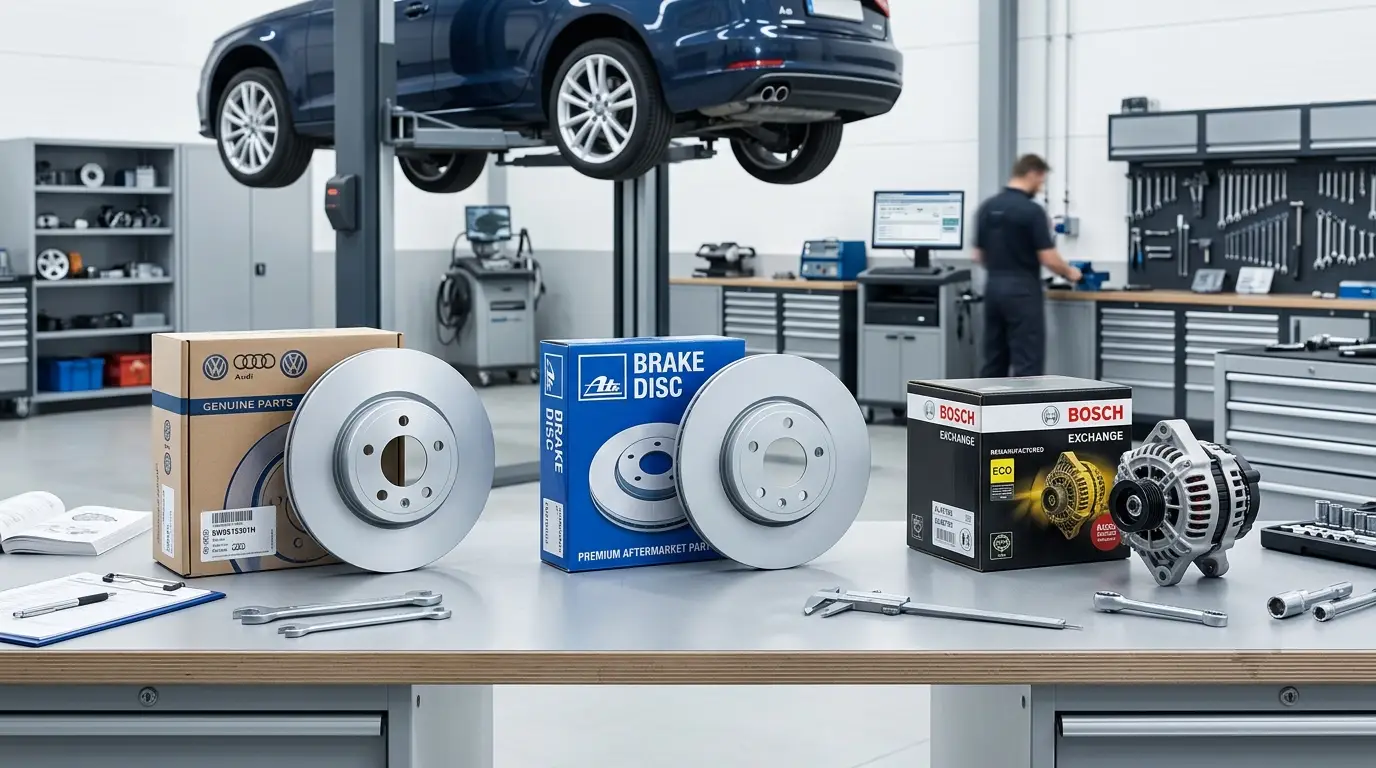
OEM stands for Original Equipment Manufacturer. These are parts made by the same company that produced the original component installed in your car when it rolled off the factory line - or made by a company under contract with your car's manufacturer.
Explanation: Think of OEM parts as buying directly from the source. If your car's headlight assembly was originally made by a supplier like Denso or Bosch under contract with your automaker, an OEM replacement comes from that exact same supply chain. This matters most for parts where precision is critical - things like sensors, control modules, or body panels that need to line up perfectly with surrounding components.
Aftermarket parts are made by companies that are not affiliated with your vehicle's original manufacturer. These third-party manufacturers design parts to be compatible with a wide range of vehicle makes and models.
Explanation: Aftermarket doesn't automatically mean "lower quality" - it means "made by someone other than the original manufacturer." A well-reviewed aftermarket brake rotor from an established supplier can perform just as well as an OEM one, often at a noticeably lower price. The key is knowing which aftermarket brands have a solid reputation for your specific part category.
Remanufactured (or "reman") parts are used components that have been disassembled, cleaned, repaired, and rebuilt to meet original performance specifications. This is different from simply reselling a used part - remanufacturing involves a structured process of restoration and testing.
Explanation: Picture a remanufactured alternator: technicians take a used unit, strip it down completely, replace worn components like bearings and brushes, and rebuild it to function like new. Because the core housing and many original components are reused, the cost stays low, but the performance can rival a brand-new part - provided the remanufacturer follows rigorous standards.
There's no universal winner in the OEM vs. aftermarket vs. remanufactured debate - each category serves a different need. OEM parts offer precision and warranty peace of mind at a premium price. Aftermarket parts deliver flexibility and savings, with quality that ranges from excellent to mediocre depending on the brand. Remanufactured parts strike a middle ground, especially for costly components, combining affordability with tested reliability.
The smartest approach is to evaluate each repair individually - factoring in the part's role, your budget, your car's age, and your long-term plans for the vehicle - rather than committing to one category across the board.
It depends on the brand and part type. Many reputable aftermarket manufacturers produce parts that match or exceed OEM quality, while lower-tier brands may fall short. Researching specific brands and reading verified reviews is the best way to judge quality before buying.
In most regions, consumer protection laws prevent manufacturers from voiding a warranty simply because you used an aftermarket part, unless that part directly caused the failure being claimed. Still, its wise to check your specific warranty terms or ask your dealer directly.
Yes, when sourced from a reputable, certified remanufacturer. These companies rebuild parts to meet original performance specifications and typically test each unit before sale. Choosing an uncertified or unknown remanufacturer, however, carries more risk.
OEM parts carry higher costs due to brand licensing, strict manufacturing standards, and the guarantee of an exact factory match. Aftermarket companies avoid these licensing fees and often produce parts at higher volumes across multiple vehicle models, lowering costs.
For older vehicles nearing the end of their ownership cycle, aftermarket or remanufactured parts are often the more practical choice, since they cost less and resale value is less dependent on OEM originality at that stage.