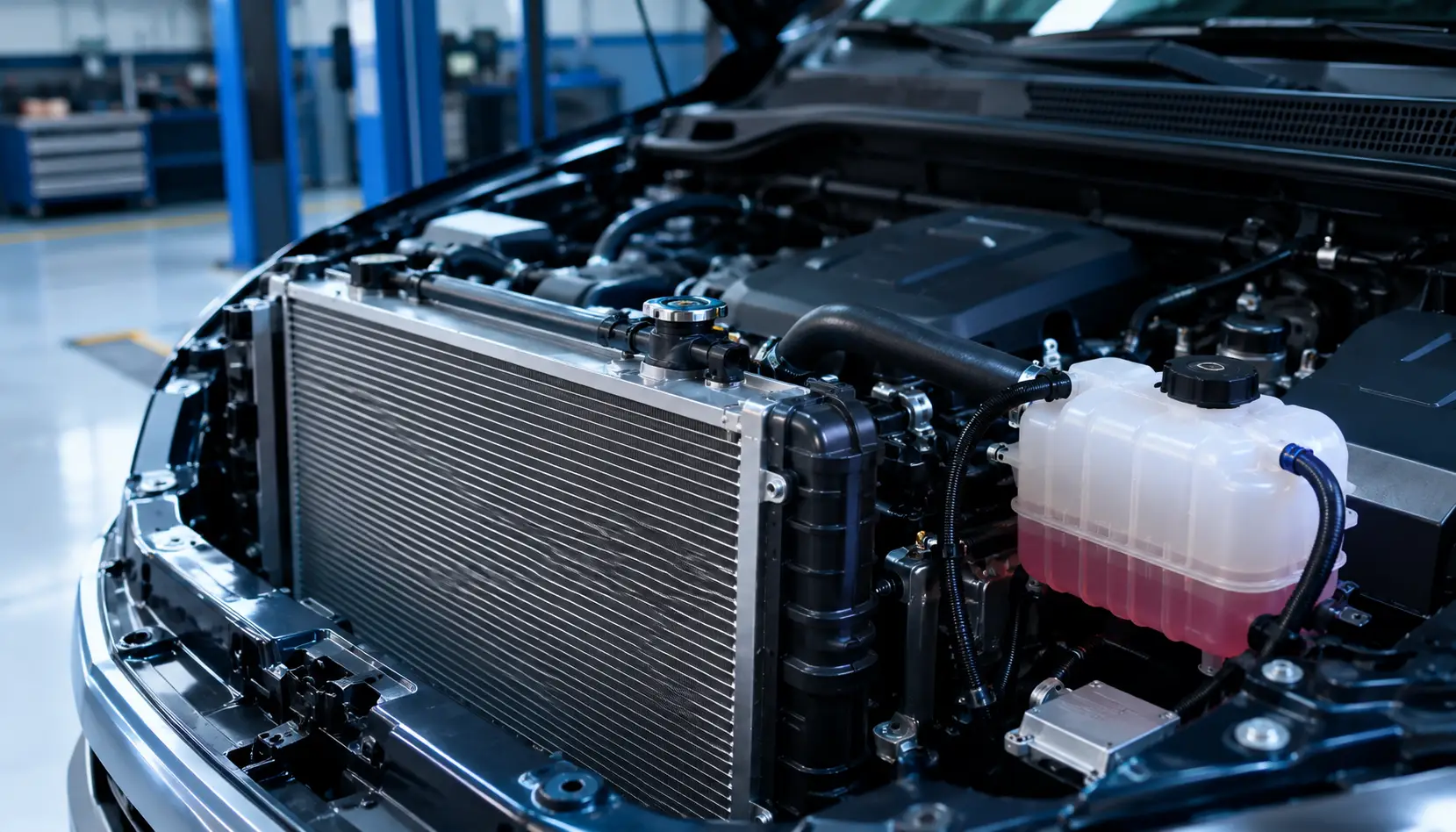
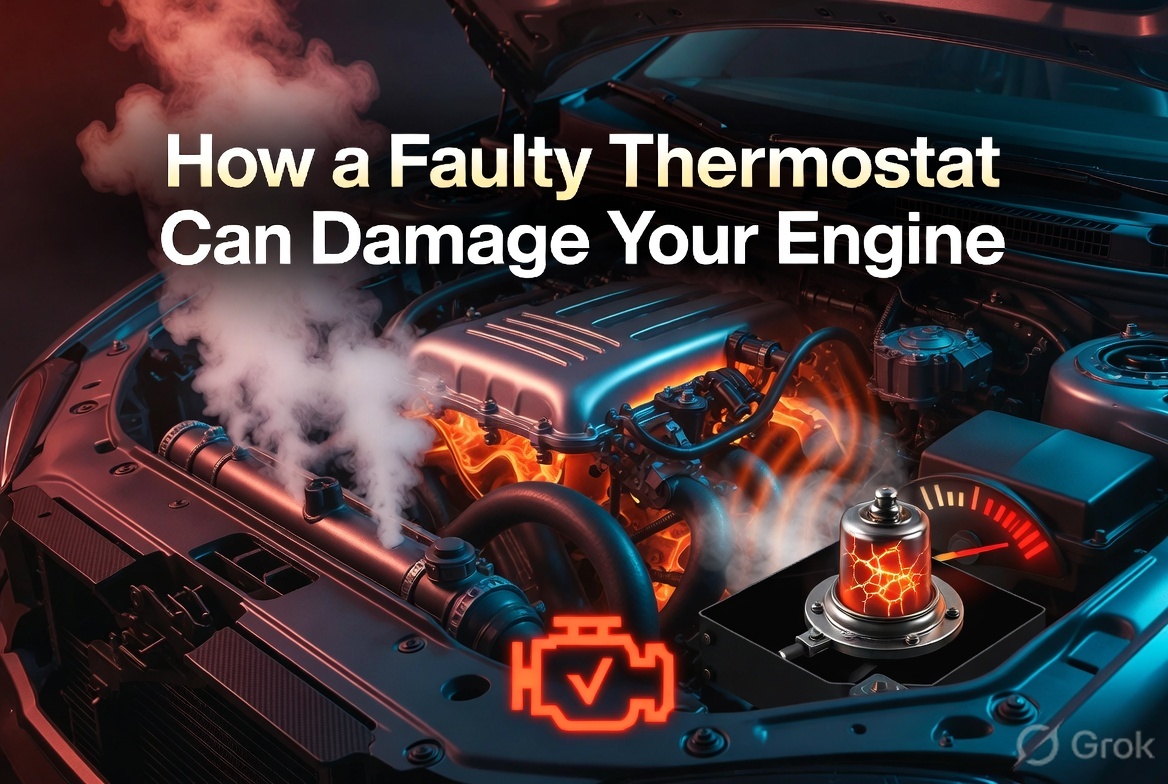
Your car’s thermostat might be small, but it plays a huge role in keeping your engine healthy. Think of it as a gatekeeper - it controls the flow of coolant between the engine and the radiator, making sure everything stays at the right temperature.
When it works properly, you barely notice it. But when it fails, the consequences can be serious - ranging from poor fuel efficiency to complete engine failure.
Let’s break it all down in a clear pointer-based format so you can understand how a faulty thermostat can damage your engine and what you can do about it.
It regulates engine temperature.
Without a properly functioning thermostat, your car engine can’t regulate heat effectively.
One of the most dangerous failure modes.
This condition can cause immediate and serious engine damage if not addressed quickly.
Less severe but still harmful over time.
While not as dramatic as overheating, it still affects engine health and efficiency.
The most common consequence of thermostat failure.
Overheating is one of the fastest ways to destroy an engine.
High temperatures can deform metal components.
A warped cylinder head often requires expensive repairs or replacement.
One of the costliest results of overheating.
This leads to major engine damage and requires immediate attention.
Temperature affects combustion.
This results in poor mileage and reduced power.
Engine runs inefficiently when too cold or too hot.
A faulty thermostat directly impacts your fuel economy.
Improper temperature increases friction.
Consistent overheating accelerates engine degradation.
Extreme heat affects coolant stability.
Low coolant worsens overheating, creating a dangerous cycle.
Excess pressure affects cooling components.
A small thermostat issue can lead to multiple system failures.
Thermostat affects cabin heating.
While not critical, it affects comfort and indicates a problem.
Modern vehicles detect thermostat issues.
Ignoring this warning can lead to serious damage.
Temperature affects emissions control.
A faulty thermostat can indirectly harm the environment.
Overheating can disrupt combustion timing.
This can severely impact engine performance and longevity.
Worst-case scenario.
Ignoring thermostat issues can result in complete breakdown.
Small part, big consequences.
Preventative maintenance saves significant money and stress.
Recognizing these symptoms early can prevent major damage.
Preventive care is always better than repair.
A faulty thermostat might seem like a minor issue, but it can have major consequences for your engine. From overheating and reduced efficiency to catastrophic engine failure, the risks are simply too high to ignore.
The good news? It’s one of the easiest and most affordable components to replace. By paying attention to warning signs and maintaining your cooling system, you can avoid costly repairs and keep your engine running smoothly.
Think of the thermostat as a small guardian of your engine - when it fails, everything else is at risk. Take care of it, and your engine will thank you with years of reliable performance.
Its not recommended, as it can quickly lead to overheating and serious engine damage.
Its relatively inexpensive compared to major engine repairs, making it a cost-effective fix.
Rapid overheating and no coolant flow are common signs.
The engine runs too cool, reducing efficiency and fuel economy.
Typically every 50,000 to 100,000 miles, or as recommended by the manufacturer.