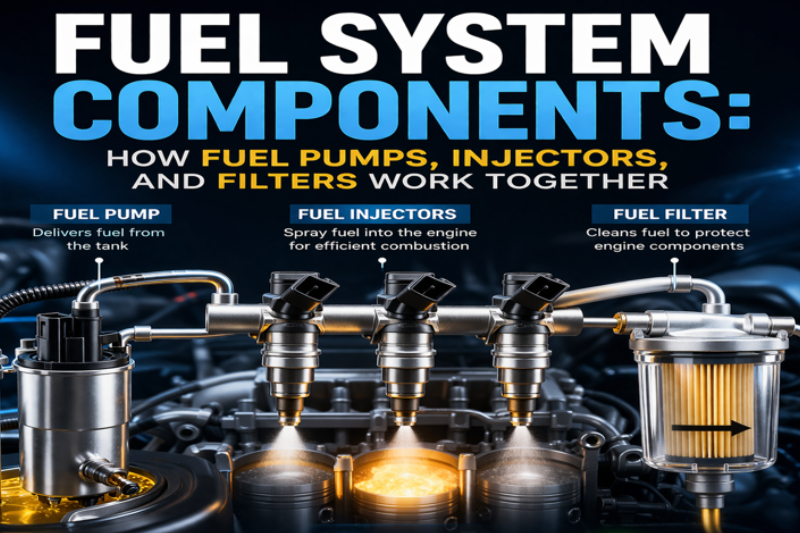
Your vehicle’s fuel system is like the circulatory system of the engine. Just as your body needs clean, properly delivered blood to function, your engine relies on a steady flow of clean fuel delivered at the right pressure and time. When all fuel system components work together seamlessly, your car runs smoothly, efficiently, and reliably.
However, if even one component fails - whether it’s the fuel pump, injector, or filter - the entire system suffers. Poor fuel delivery can lead to reduced performance, poor fuel economy, rough idling, or even complete engine failure.
Let’s break down how the key fuel system components work together, using a clear pointer-based format to make everything easy to understand.
Fuel System Components
The starting point of the entire fuel system.
The fuel tank is more than just a container - it’s the foundation of the fuel system. Modern tanks are sealed to reduce emissions and keep fuel clean.
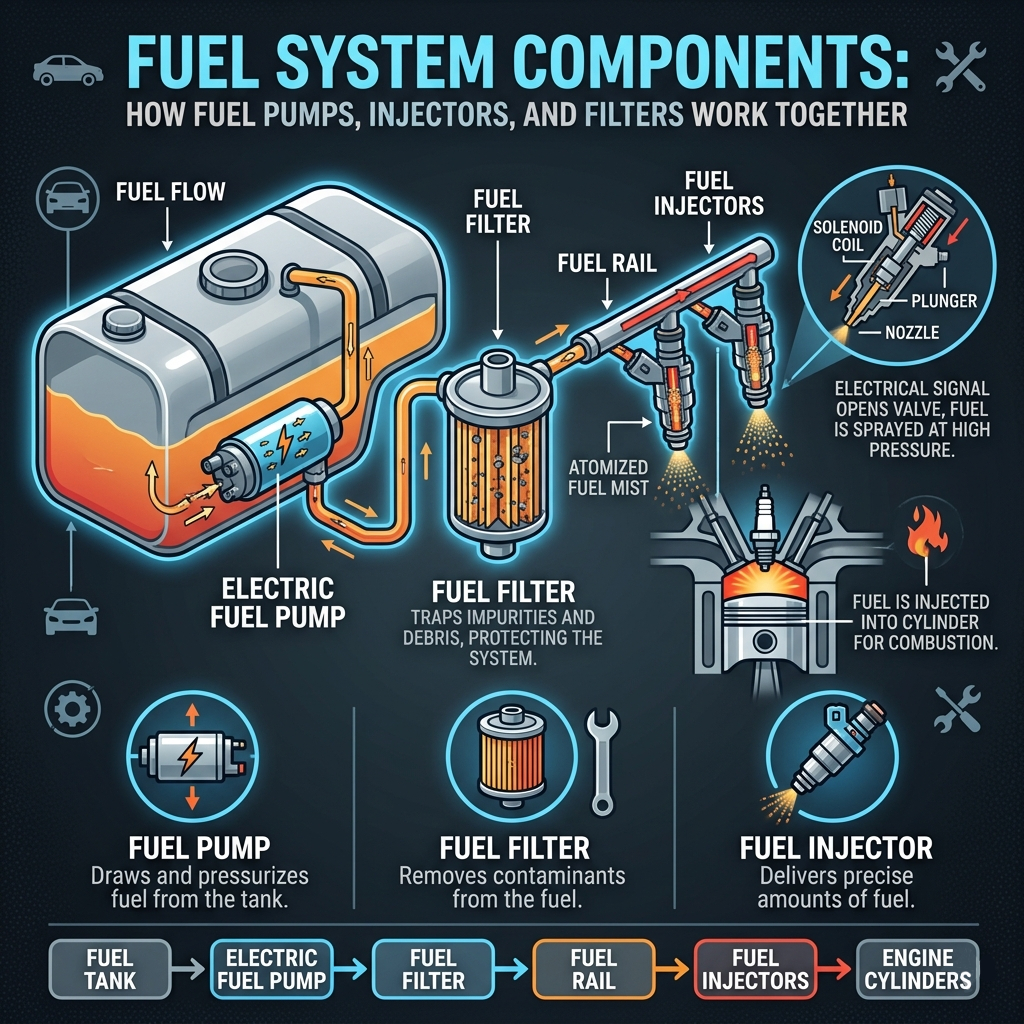
Delivers fuel from the tank to the engine.
The fuel pump ensures a constant and pressurized flow of fuel. Without proper pressure, fuel cannot reach the engine efficiently, leading to performance issues or stalling.
Transport fuel from the tank to the car engine.
Fuel lines act as the delivery network. Any leak or blockage in these lines disrupts fuel flow and can pose safety risks.
Removes contaminants from fuel.
Clean fuel is critical. Even small particles can clog injectors or damage engine components. A clogged filter restricts fuel flow and reduces engine performance.
Maintains consistent fuel pressure.
The regulator keeps pressure stable regardless of driving conditions. Too much or too little pressure affects fuel delivery accuracy.
Deliver fuel directly into the engine.
Fuel injectors are responsible for delivering the right amount of fuel at the right time. They atomize fuel into a fine mist for better combustion and efficiency.
Controls airflow into the engine.
Although not a fuel component directly, the throttle body plays a key role in balancing air with fuel for proper combustion.
The brain of the fuel system.
The ECU ensures the fuel system operates efficiently. It uses data from sensors to maintain the ideal air-fuel mixture for performance and emissions.
Where fuel meets air for combustion.
This process is the core of engine operation. A proper mixture ensures maximum efficiency and power.
Understanding how each part functions individually is important - but the real magic happens when they work together as a system.
Step-by-Step Flow:
Each step depends on the previous one. If any component fails, the entire process is disrupted.
Recognizing early warning signs can prevent major issues:
These symptoms often indicate problems with the pump, injectors, or filter.
Routine maintenance - such as replacing fuel filters and cleaning injectors - keeps the system functioning properly.
Clogged Fuel Filter
Failing Fuel Pump
Dirty or Faulty Injectors
Fuel Leaks
Preventative care is always more cost-effective than repairs.
Your vehicle’s fuel system is a finely tuned network of components working together to deliver the right amount of fuel at the right time. From the fuel pump pushing fuel forward, to the filter keeping it clean, to the injectors delivering it precisely - every part plays a vital role.
When one component fails, the entire system suffers. That’s why understanding how these parts work together helps you maintain your vehicle better and avoid unexpected breakdowns.
A well-maintained fuel system means better performance, improved fuel efficiency, and a longer-lasting engine. Treat it right, and your car will reward you with smooth and reliable driving every time.
Most vehicles require replacement every 20,000 to 40,000 miles, but always check your manufacturers recommendation.
Difficulty starting, engine sputtering, loss of power, and stalling are common signs.
Yes, clogged injectors can reduce fuel efficiency, cause rough idling, and decrease engine power.
Its not recommended, as problems can worsen quickly and may lead to breakdowns or safety risks.
Use quality fuel, perform regular maintenance, replace filters on time, and address issues early.