Your car can go fast. That’s impressive. But what’s even more impressive - and far more important - is how quickly and safely it can stop.
Every time you press the brake pedal, a complex system springs into action. It feels simple from the driver’s seat. You push a pedal, the car slows down. Easy, right? Not quite. Behind that smooth stop is a coordinated effort between multiple brake system components, all working together under intense pressure and heat.
Understanding how your brake pads, rotors, calipers, and related parts function doesn’t just make you more informed - it makes you safer. Let’s break down the brake system piece by piece so you know exactly what’s happening when you hit the brakes.
At its core, your brake system converts motion into heat. When your car is moving, it carries kinetic energy. The brakes create friction, which transforms that energy into heat and slows the wheels down.
Here’s the simplified chain reaction:
It all happens in seconds - but each component plays a critical role.
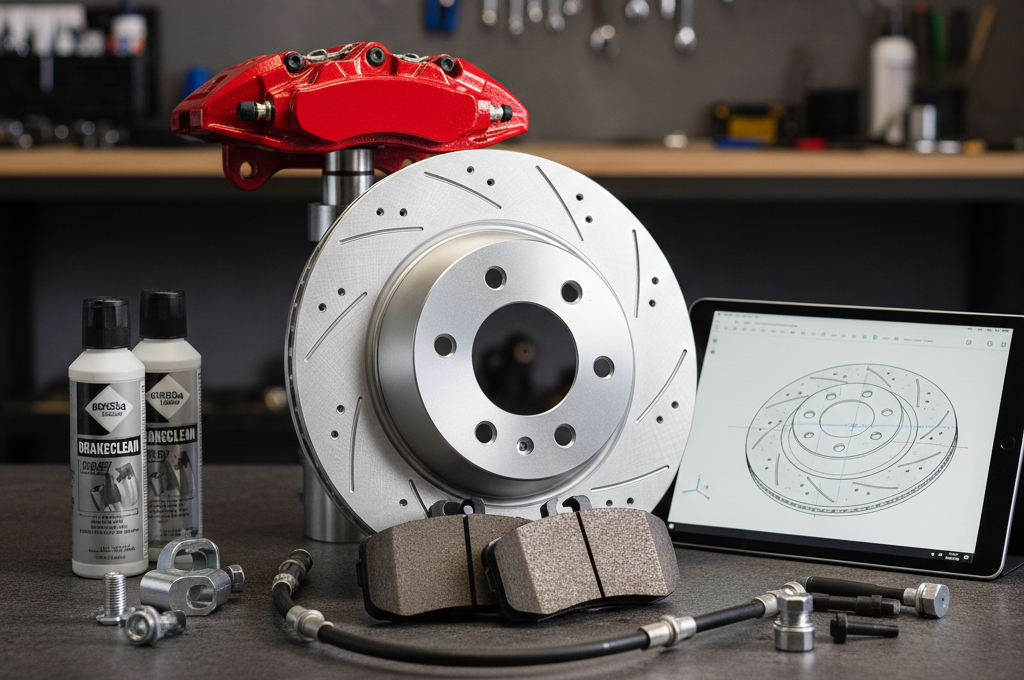
Brake pads are the stars of the stopping process. They’re the components that physically press against the rotors to create friction.
Brake pads typically come in three main types:
Each type balances noise, performance, durability, and cost differently.
Because brake pads create friction, they naturally wear out over time. Think of them like the eraser on a pencil - effective but slowly disappearing with use.
Worn brake pads can cause:
Most pads need replacement every 25,000 to 70,000 miles, depending on driving habits.
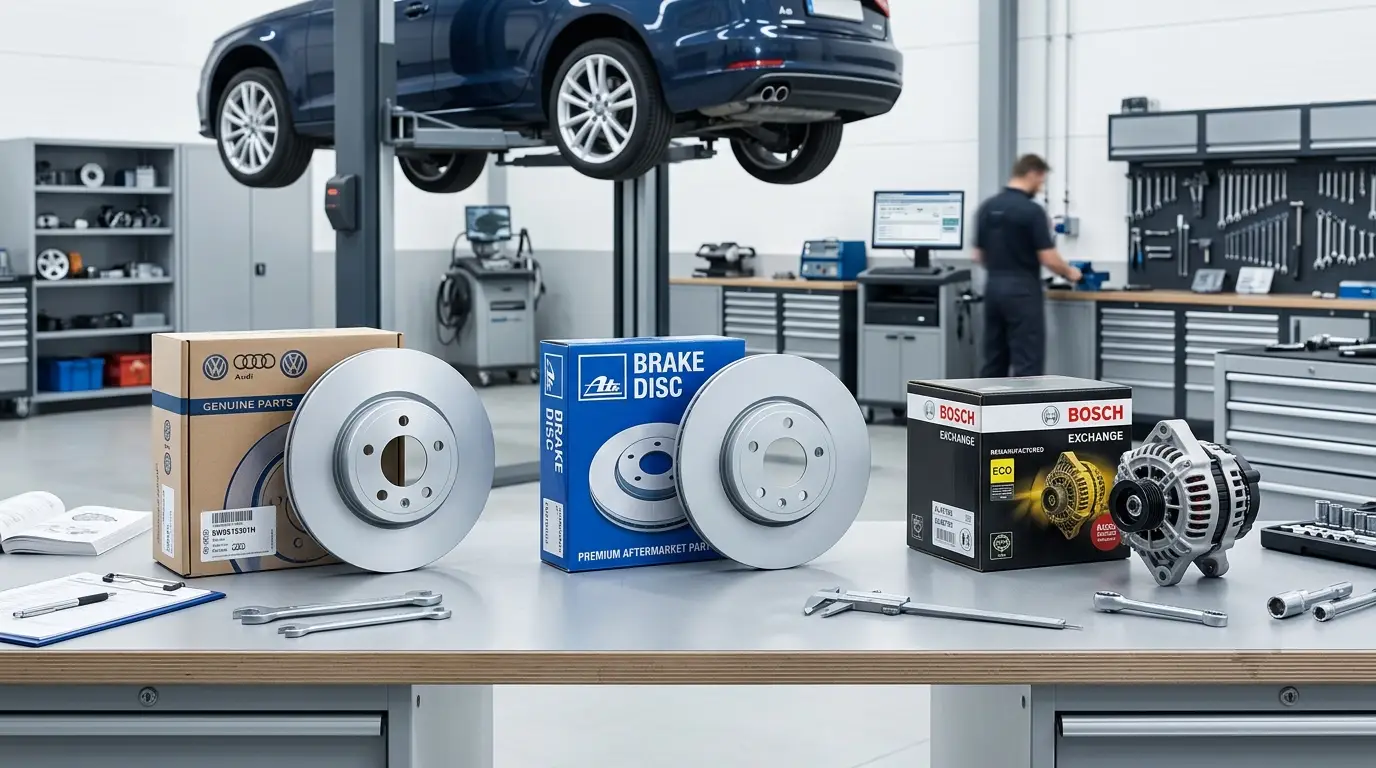
Brake rotors (also called brake discs) are metal discs attached to your wheels. When you press the brakes, the pads clamp onto these spinning discs.
Rotors absorb and dissipate the intense heat created by friction. Without them, braking would be impossible.
There are several types of rotors:
Over time, rotors can warp or wear down, causing vibrations when braking.
Brake Calipers house the brake pads and apply pressure to the rotors.
When you press the brake pedal, hydraulic fluid pushes pistons inside the caliper. These pistons force the pads against the rotor, creating the friction needed to slow the vehicle.
There are two main types:
A malfunctioning caliper can cause uneven wear, pulling to one side, or reduced braking power.
Brake fluid doesn’t get as much attention, but it’s just as critical.
When you press the brake pedal, you’re not directly pushing the calipers. Instead, brake fluid transfers that force through hydraulic lines.
Brake fluid must:
Over time, brake fluid absorbs water, which reduces effectiveness. That’s why it should be replaced every two to three years.
Brake lines and hoses carry brake fluid from the master cylinder to the calipers.
Metal brake lines provide durability, while rubber hoses allow flexibility as wheels move.
Leaks or cracks in these lines can result in:
Regular inspections are essential.
The master cylinder is the heart of your hydraulic braking system.
When you press the pedal, the master cylinder converts that force into hydraulic pressure. It sends brake fluid through the lines to activate the calipers.
If the master cylinder fails, your brakes may feel spongy - or stop working entirely.
Brake boosters reduce the effort needed to press the brake pedal.
Using vacuum pressure (or electric assistance in modern vehicles), the booster amplifies your pedal force.
Without it, braking would require much more leg strength - especially during sudden stops.
ABS prevents your wheels from locking up during hard braking.
When wheels lock, you lose steering control. ABS rapidly pulses brake pressure, allowing you to maintain traction and steer safely.
It’s one of the most important safety innovations in modern vehicles.
Most modern vehicles use disc brakes in the front and sometimes drum brakes in the rear.
While drum brakes are still used, disc brakes offer superior stopping power in most situations.
Your brake system often warns you before failure.
Watch for:
Ignoring these signs can turn a minor repair into a major safety risk.
Your driving style plays a huge role in brake lifespan.
Frequent hard braking, aggressive driving, and heavy loads increase wear. Smooth driving and maintaining safe following distances can extend the life of pads and rotors significantly.
Think of brakes like running shoes - the harder you push them, the faster they wear out.
Brake system maintenance isn’t optional - it’s essential.
Routine checks ensure:
Replacing pads before they’re fully worn prevents expensive rotor damage.
Some drivers choose performance brake upgrades for better stopping power.
Upgrades may include:
While not necessary for everyday driving, they can improve braking under heavy loads or spirited driving conditions.
Your brake system is one of the most important safety systems in your vehicle. From brake pads and rotors to calipers, fluid, and the master cylinder, every component plays a critical role in keeping you safe on the road.
Understanding how these parts work together helps you recognize problems early and maintain your vehicle properly. When it comes to safety, there’s no room for guesswork. A well-maintained brake system ensures confident, responsive stopping every time you press the pedal.
Most brake pads last between 25,000 and 70,000 miles, depending on driving habits and pad material.
Sometimes, yes. However, worn or warped rotors should be resurfaced or replaced to ensure proper braking.
Excessive heat from hard braking or uneven pad wear can cause rotor warping.
Vibration during braking often indicates warped rotors or uneven brake pad wear.
If the fluid is dark, contaminated, or its been over two years since replacement, its likely time for a change.